In the hospitality and food service industry, cleanliness is more than just appearance—it is a critical part of protecting public health and maintaining customer trust.
Hotels, restaurants, catering operations, and food production facilities handle food daily, making sanitation procedures essential for preventing contamination and foodborne illness.
Without proper sanitation systems, harmful bacteria, viruses, and other contaminants can spread quickly through food contact surfaces, utensils, equipment, and employee handling practices.
Why Sanitation Matters
Poor sanitation can lead to serious consequences, including:
- Food contamination incidents
- Customer illness and complaints
- Regulatory penalties
- Damage to brand reputation
- Temporary business closure
- Financial losses
A single sanitation failure can impact both customer safety and long-term business credibility.
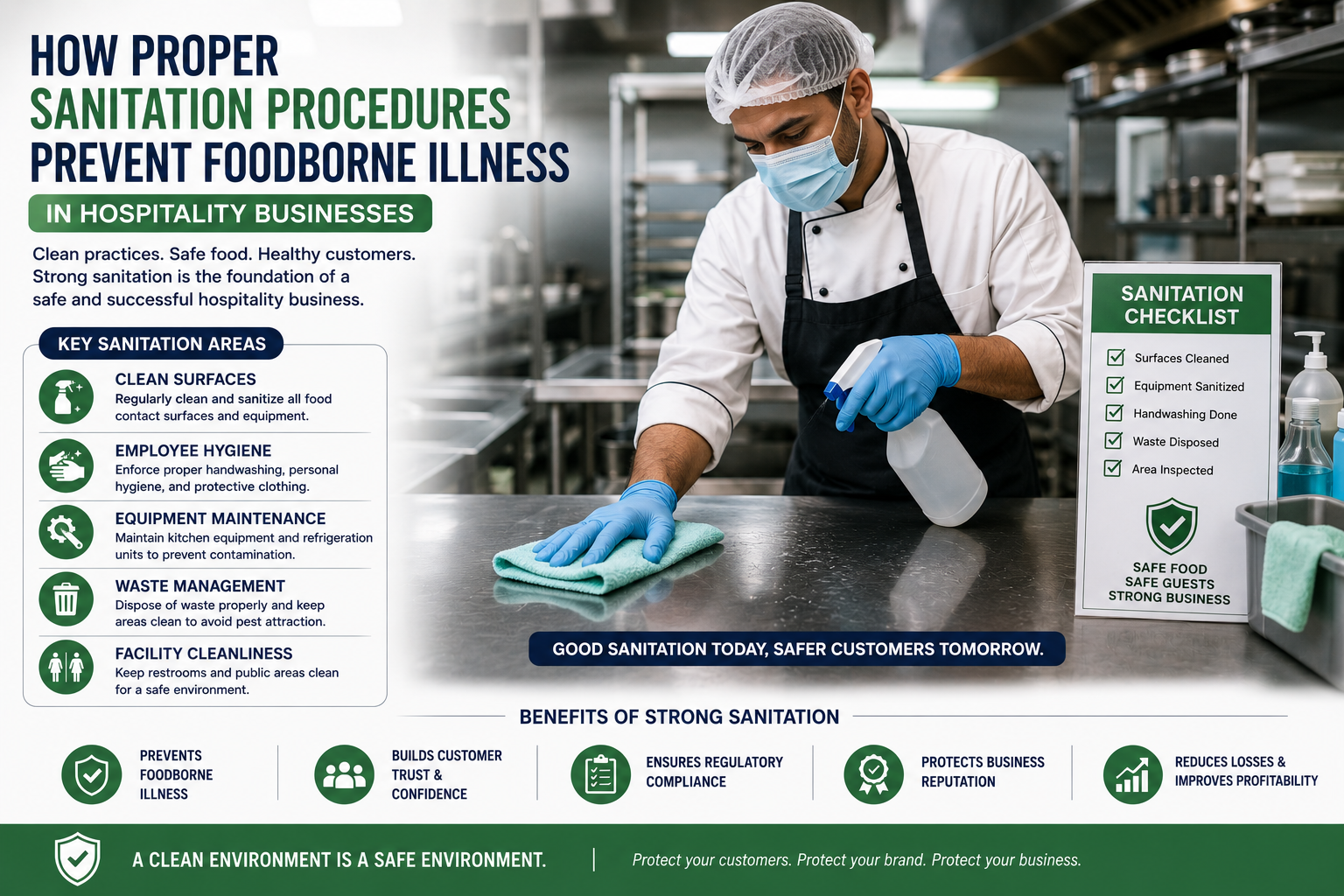
Key Areas That Require Strict Sanitation Control
Food Contact Surfaces
Preparation tables, cutting boards, utensils, and kitchen equipment must be cleaned and sanitized regularly to prevent contamination.
Employee Hygiene
Proper handwashing, protective clothing, and hygiene protocols reduce contamination risks significantly.
Equipment Maintenance
Poorly maintained refrigeration units, storage systems, and kitchen machinery can become contamination sources.
Waste Management
Improper garbage handling attracts pests and creates unsafe operating conditions.
Restroom and Public Areas
Clean guest and staff facilities contribute to overall hygiene standards and regulatory compliance.
Building Effective Sanitation Procedures
Strong sanitation programs should include:
- Daily cleaning schedules
- Approved sanitizing products
- Staff hygiene training
- Monitoring and inspection routines
- Corrective action procedures
- Documentation for compliance tracking
Consistency is key. Sanitation should be a daily operational habit—not a last-minute inspection response.
Final Thoughts
Hospitality businesses succeed when customers feel confident in both service quality and safety standards.
Proper sanitation procedures reduce operational risks, protect guests, and strengthen business reputation.
Investing in sanitation excellence is investing in long-term business success.